
The Ultra-Low Latency Revolution: Why Milliseconds Define the Modern Live Dealer Experience
In the high-stakes world of digital gambling, the difference between a profitable session and a frustrating loss often hinges on a single metric: latency. The integration of 5G technology in live casinos represents a paradigm shift in how players interact with remote dealers. Unlike legacy 4G LTE networks, which operate on sub-6 GHz frequencies with typical round-trip times of 30 to 50 milliseconds, 5G New Radio (NR) operates on a spectrum that drastically reduces this window. For live roulette, baccarat, and blackjack, this means the video feed you see is no longer a delayed historical record; it is a real-time, synchronous event. 🎰 The reduction in jitter and packet loss ensures that the ball's final resting place is transmitted to your device almost instantaneously, eliminating the "late bet" rejections that plague satellite and copper-wire connections.
Edge Computing and the Elimination of Buffering Artifacts in HD Streaming
The architecture of a 5G-enabled live casino goes far beyond simply faster download speeds. It leverages Multi-Access Edge Computing (MEC) to process data closer to the user, bypassing the congested core networks that cause pixelation and frame drops. When a player engages with a live dealer streamed in 4K resolution, the required bandwidth is substantial. 5G's enhanced Mobile Broadband (eMBB) capabilities provide the necessary throughput to maintain this fidelity without compression artifacts. This technical superiority ensures that the subtle visual cues—the dealer's hand movements, the shuffle of the cards, the spin of the wheel—are delivered with crystal-clear clarity. 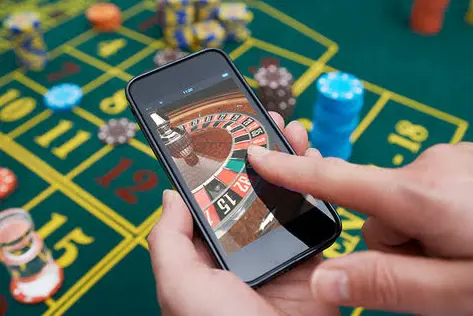 For the discerning bettor, this isn't just about aesthetics; it's about game integrity and the ability to read the physicality of the game in real-time.
Immersive AR and VR Integration: The Next Frontier of Remote Wagering
The true potential of 5G in the gambling sector is unlocking immersive technologies that were previously impossible over wireless connections. Virtual Reality (VR) and Augmented Reality (AR) live casinos demand data rates exceeding 100 Mbps and latency below 10 milliseconds to prevent motion sickness and maintain the illusion of presence. 5G Ultra-Reliable Low-Latency Communication (URLLC) is the backbone that makes this feasible. Players can now don a headset and sit at a virtual table where the cards are dealt by a real human dealer, streamed with such precision that the physical and digital worlds merge. This isn't a gimmick; it is a fundamental expansion of the operator's floor space, allowing them to host unlimited players at a single physical table without degradation of service quality. 🃏
Operational Scalability and Dynamic Table Management for High Rollers
From an operator's perspective, the deployment of 5G infrastructure allows for dynamic resource allocation. High-roller tables can be prioritized with dedicated network slices, ensuring that VIP players experience zero downtime during peak traffic hours. This network slicing capability is unique to 5G and provides a level of Quality of Service (QoS) that guarantees a seamless experience regardless of external network congestion. Furthermore, the reduced latency enables live dealers to interact with players via real-time chat and video feeds without the awkward pauses characteristic of older technologies.  The psychological impact of this immediacy cannot be overstated—it builds trust and immersion, making the remote experience feel as authentic as standing on the casino floor in Macau or Las Vegas.
Security Protocols and Transactional Integrity in a 5G Ecosystem
With greater speed comes the necessity for robust security. 5G incorporates advanced encryption and authentication protocols, such as 256-bit AES and improved Subscriber Identity Module (SIM) authentication, which are critical for protecting financial transactions in live casinos. The reduced attack surface compared to public Wi-Fi networks ensures that player funds and personal data are safeguarded against interception. For the player, this translates to faster deposit and withdrawal processing times, as the network can handle high-volume, encrypted financial handshakes in fractions of a second. The synergy between 5G security frameworks and blockchain-based casino ledgers creates an ecosystem where transparency and speed coexist without compromise. 🔒
The Impact on Mobile-First Player Demographics and Global Market Access
The proliferation of 5G networks is directly correlated with the rise of the mobile-first gambler. In emerging markets where fiber-optic infrastructure is limited, 5G Fixed Wireless Access (FWA) provides a viable high-speed alternative for home-based players. This democratization of high-speed internet expands the addressable market for live dealer operators, allowing them to reach players in regions previously deemed unreachable due to connectivity constraints. The result is a truly global gaming floor where a player in São Paulo can compete at a table hosted in Malta with the same fluidity as a local patron. The economic implications are staggering, driving higher engagement rates and longer session durations due to the lack of technical friction.