
RNG Malta Seed: How Often Change?
The RNG Malta seed rotation cycle is not a fixed calendar event, and anyone telling you it resets on a neat weekly or monthly schedule is selling you garbage. Licensed Malta operators run provably fair seeding under a rotating commitment scheme, and the actual change frequency is governed by hash-chain epochs, not by a marketing team's convenience.
Here is the raw mechanics. A certified RNG does not "change its seed" in the naive sense players imagine. It advances a deterministic hash chain, and the server seed is revealed only after an epoch expires. The epoch length is the real answer to how often the seed changes, and it is operator-configurable within the bounds set by the testing lab's certification scope.
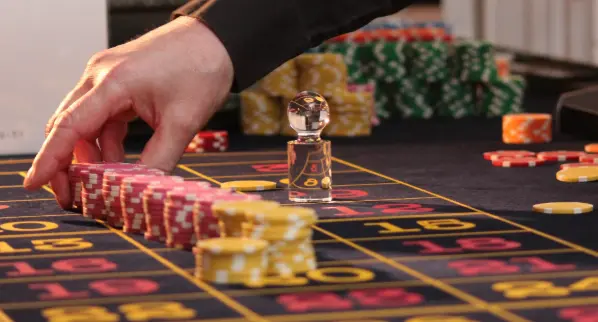
Epoch Length vs. Player Perception
Most Malta-licensed crypto casinos bind each server seed to a fixed nonce ceiling, typically between 10,000 and 50,000 bets per seed, or to a time window of 24 to 168 hours, whichever hits first. That means the RNG Malta seed rotates far more often than the average punter assumes but far less often than the paranoid crowd claims on forum threads.
When the nonce ceiling triggers, the seed retires, the hash is published, and a fresh seed enters the chain. The player-facing client seed stays under your control, which is exactly why the rotation cadence matters. 🔍 If the house swaps the server seed without a visible commitment hash, you have no audit trail and the whole provably fair claim collapses into theater.
The Commitment Hash Is Your Only Real Proof
Seed rotation without pre-commitment is worthless. The operator must publish the hash of the next server seed before the epoch begins. If that hash appears after the fact, or if the rotation schedule is opaque, treat the whole Malta seed rotation as unverifiable. This is the single technical fault line that separates a legitimately audited platform from a cosmetic one.
Smart players record the commitment hash at epoch start, then verify it against the revealed seed at epoch end using a standard HMAC-SHA256 check. Any mismatch means the rotation was tampered with or the seed was never committed in the first place. That is not a red flag; that is a full stop. 🛑

Why Frequency Alone Tells You Nothing
A short epoch with weak commitment discipline is more dangerous than a long epoch with airtight pre-commitment. The rotation frequency is a parameter; the integrity of the hash chain is the architecture. Operators that rotate every 24 hours but publish hashes late are gaming the perception of freshness while leaving the audit surface broken.
Certified labs certify a range, not a single value. An operator can legally rotate anywhere inside that certified band, and many tune the epoch length dynamically based on wager volume to keep nonce ceilings from overrunning. That dynamic tuning is the part nobody documents on the help page, and it is precisely where the RNG Malta seed rotation becomes a black box for the average player. 🎲
What You Should Actually Check
Pull the commitment hash, log the timestamp, note the nonce at epoch start, and verify the reveal at epoch close. If the operator cannot produce a consistent hash chain across three consecutive rotations, the frequency figure is irrelevant noise. A 48-hour epoch with verified commits beats a 6-hour epoch with missing hashes every single time.