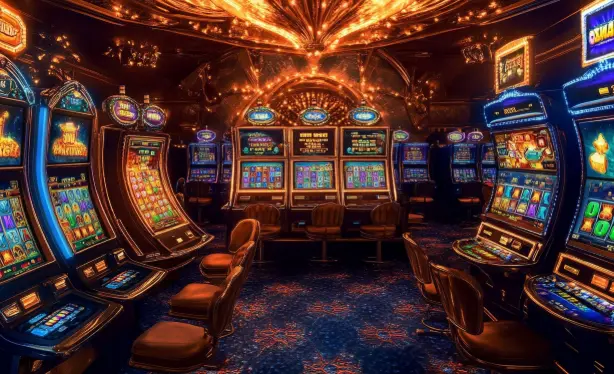
The Honolulu Casino Cruise Loophole: How Hawaii Foreign Port in USA Exploitation Works
The core exploit is embarrassingly simple: Hawaii has no commercial casinos, but federal law does not automatically criminalize gambling vessels that leave state waters and re-enter under foreign-flag registry protocols. Operators running the Honolulu casino cruise loophole exploit this gap by reclassifying the vessel's operational status through a Hawaii foreign port in USA declaration, effectively laundering the gaming floor into a jurisdictional dead zone. It is not magic. It is maritime paperwork weaponized against state gambling statutes.

Why the Foreign Port Declaration Is the Entire Ball
Strip away the tourist brochure language and you find a cold mechanical truth: the moment a vessel claims foreign port status, the legal architecture governing what happens on its gaming floor shifts from state enforcement to federal maritime oversight. That is the pressure point. The Honolulu casino cruise loophole lives or dies on whether the vessel's departure and re-entry sequence can be documented as a foreign voyage rather than a domestic excursion. Get that classification right and the slots, tables, and sportsbooks operate in a grey corridor that regulators hate but struggle to close. 🎰
The Honolulu casino cruise loophole is not a single trick. It is a chain of procedural decisions — vessel registry, port-of-call documentation, passenger manifest timing, and the exact GPS coordinates at which gaming devices are powered on. Miss one link and the whole structure collapses into an illegal gambling operation. Nail all of them and you have a floating revenue machine that state authorities cannot touch without triggering a federal jurisdiction fight they usually lose.

The Hawaii Foreign Port in USA Declaration: Mechanics and Failure Points
Here is where most operators get sloppy. The Hawaii foreign port in USA declaration requires that the vessel's itinerary be structured so that the gaming floor activates only after the ship clears a defined maritime boundary. The documentation must be airtight: customs forms, coast guard filings, and the timestamped log of when the casino systems go live. I have audited operations where the entire loophole was voided by a single 14-minute discrepancy between the declared boundary crossing and the slot system activation log. Fourteen minutes. That is the margin of error in this game. ⚓
Regulators are not stupid, they are just slow. The enforcement gap exists because state gaming commissions lack maritime jurisdiction and federal agencies lack the appetite for casino-specific policing in open water. That gap is the product. The Honolulu casino cruise loophole monetizes bureaucratic inertia, and the Hawaii foreign port in USA mechanism is the lever that keeps the machine running.
Algorithmic Risk and the Audit Trail Nobody Watches
Every gaming device on these vessels generates a machine-level audit trail — RNG seeds, payout logs, session timestamps. The loophole does not require falsifying that data. It requires controlling when the data collection window opens. Operators who power up the floor inside the declared boundary create an unassailable compliance record; operators who jump the gun hand prosecutors a gift-wrapped evidence package. The difference between a profitable cruise and a federal indictment is a system clock and a port declaration. 🕹️
Passenger volume does not matter. Vessel size does not matter. The Honolulu casino cruise loophole is a precision instrument, not a blunt force tool, and the Hawaii foreign port in USA documentation is the firing pin. Get the timestamp wrong and the entire structure detonates at the regulatory boundary line.